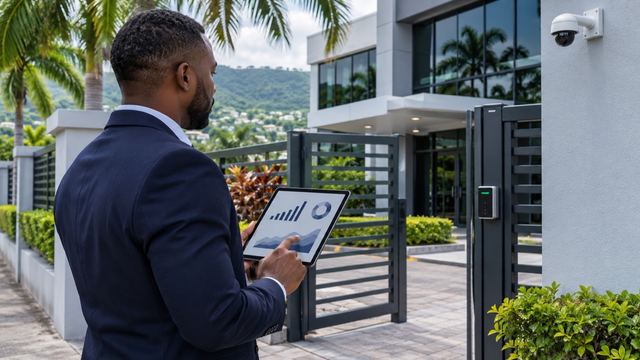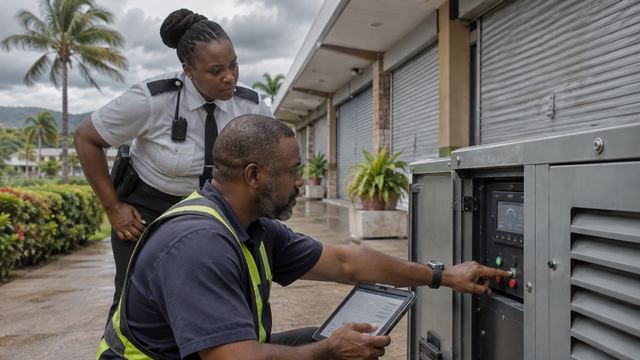
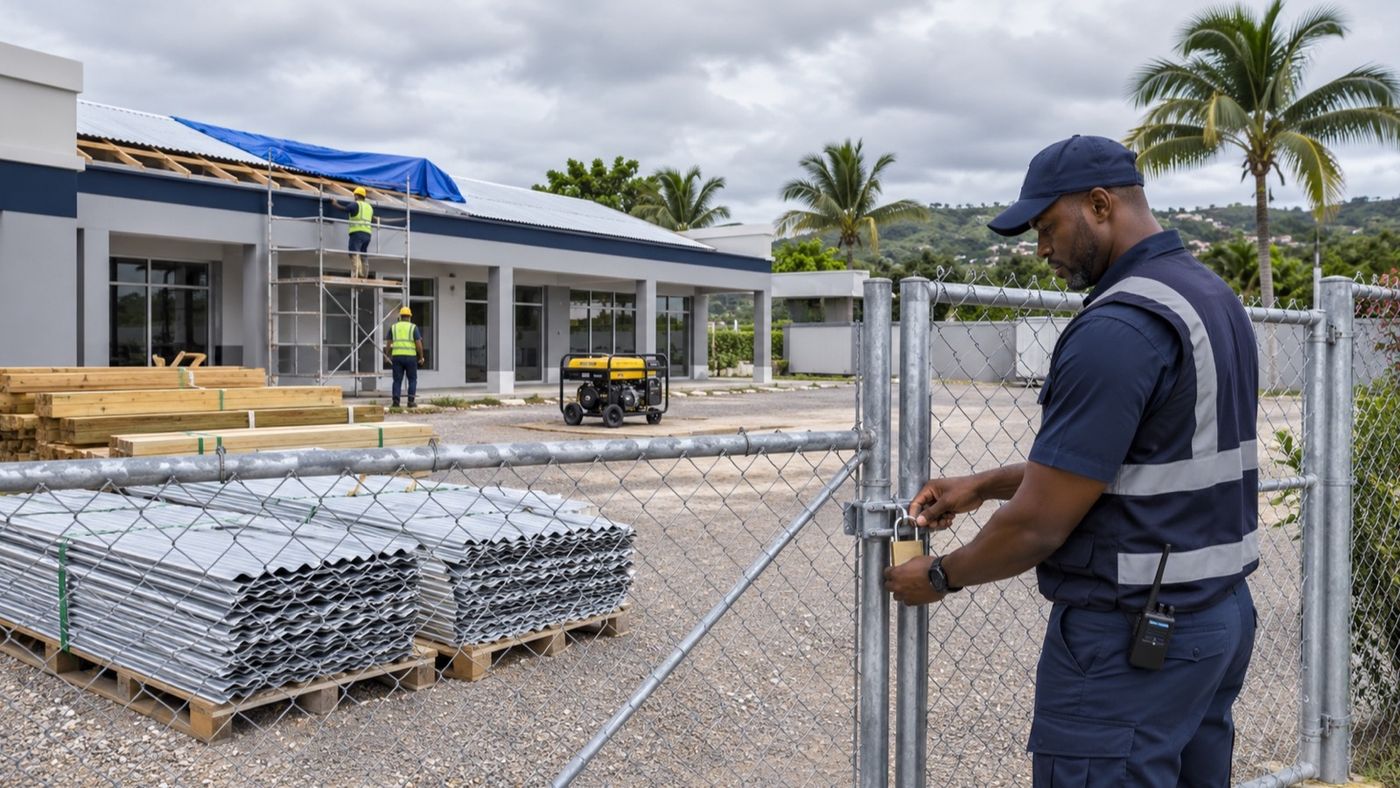
One year ago today, Hurricane Melissa made landfall near New Hope, Westmoreland, as a Category 5 storm. It was the strongest hurricane on record to strike Jamaica, and the recovery is still under way: hotels, homes, roads and businesses across the west and south are still being rebuilt.
Most organisations judged their response by how fast they reopened. Fewer asked a harder question: how well were people, premises and assets protected while the normal controls were down? That question deserves an answer before the next season.
The risk rises when the storm passes
The days and weeks after a major storm create conditions that ordinary security plans are not built for. Power is out, so alarms, cameras and electric gates stop working or run on batteries that fail. Fences and perimeter walls are damaged. Staff are dealing with their own homes and families, so guard rosters thin out. And the things in short supply — fuel, generators, roofing, building materials — become targets.
None of this is unusual. What is unusual is a plan that anticipates it.
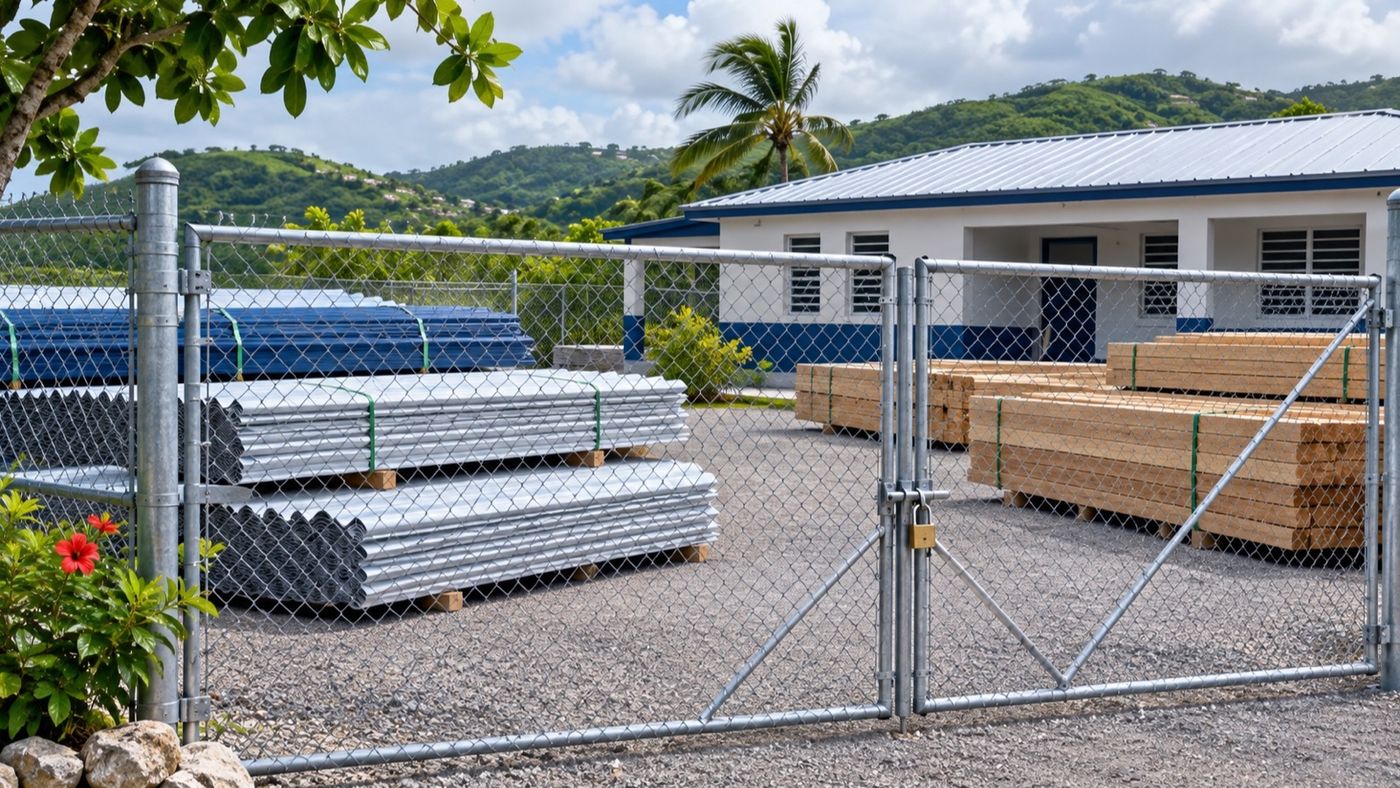
Rebuilding brings its own exposure
Recovery puts large volumes of valuable materials on open sites: zinc, lumber, cable, solar panels, plumbing fixtures. Contractors and day workers come and go in numbers most sites have never had to manage. Insurance and reconstruction deadlines create pressure to move fast, and access control is usually the first thing to slip.
For construction and development clients, and for any organisation repairing its own premises, the period between delivery and installation is where loss happens.
Healthcare and essential services carry extra weight
Clinics, hospitals and community facilities stay open when others close. After a storm they see more people, more stress and less normal supervision. Managing access to patient areas, medicines and stores matters most exactly when staffing is hardest.
What a security chapter in your continuity plan should cover
Most business continuity plans cover data backups, supplier lists and communication trees. Few have a section on security. It does not need to be long, but it should answer:
- Who is responsible for site security when normal staff cannot get to work?
- What happens when power fails — which systems have backup power, for how long, and what replaces them when it runs out?
- How is the perimeter secured if fencing or gates are damaged?
- Where are high-value items stored — fuel, generators, stock, materials — and who holds the keys?
- How will you control access for contractors, adjusters and volunteers during recovery?
- How will incidents be recorded for insurance and police reports when systems are down?
What this means in practice
- Review your continuity plan now and add a short security section if it has none.
- Identify the three assets most likely to be stolen after a storm, and plan how each will be protected.
- Agree a minimum guard or patrol arrangement for the first two weeks after an event.
- Pre-arrange a sign-in and pass process for recovery contractors.
- Test the plan before 1 June, not after a warning is issued.
The anniversary is a reminder of how much was lost, and how much has been rebuilt. It is also the right moment to make sure the next recovery starts from a stronger position.
Talk to us about a post-storm risk review. → Risk assessments
Sources: Jamaica Observer, 28 October 2026.