

LatestFrom the Firm
Introducing the new S.A.M.S. website
A clearer picture of what we do, who we do it for, and how to start a conversation with us.
Practical thinking on security governance, risk and operations — written for decision-makers, not specialists.
On 19 March 2027, Security Advisory & Management Services Ltd. marks 40 years since incorporation.
A clearer picture of what we do, who we do it for, and how to start a conversation with us.

More stock, more cash, more people — and fewer staff on duty. The holidays stretch every part of a security plan at once.

The security budget is usually set by last year's number plus inflation. There is a better way, and November is the time to start.

A delay in enforcement is not a delay in obligation. It is a window to get your screening and records in order.

Passing the audit proves the plan exists. It does not prove the plan works.

Falling national crime figures are good news. They are not, by themselves, a reason to change your security budget.

A storm tests your continuity plan. The weeks after it test your security plan.
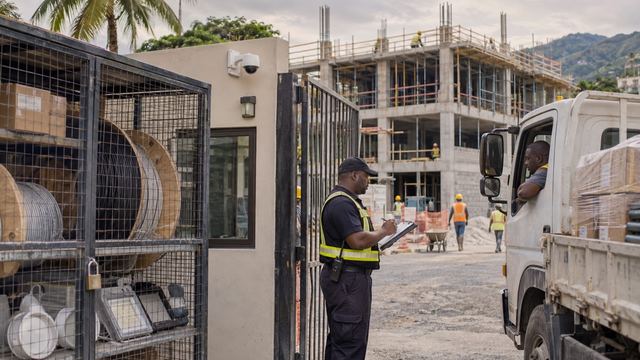
A construction site changes every week. Its security plan has to change with it.

Writing a procedure is the easy part. Getting people to follow it is where most fail.

The most convincing fraud attempts no longer look like fraud. The best defence is a habit, not a technology.

Head office has a security policy. The question is whether the branch in another parish is following it.

Most continuity plans focus on getting back to work. Few say how premises and assets will be protected while normal security is down.

Cameras are one of the most visible security investments. Without the right arrangements around them, they are also one of the least effective.

What happens in the first day after an incident determines what you can prove, recover and learn.

Your employees are screened before they start. Are the people who clean your offices and service your systems?

Many firms lead with a wall of client logos. We don't — and that is deliberate.

A long risk register can feel thorough. A short one is more likely to change decisions.

The busiest weeks of the year are also the most exposed. A few site checks before the rush make a real difference.

Boards are asked to oversee risk. Most receive very little useful information about security.

A post order is the most-used security document in your organisation. It is often the least maintained.

Most security spending faces outward. Many of the most damaging losses start inside.

They are often used interchangeably. They answer different questions, and choosing the right one saves time and money.

The most common weaknesses are rarely expensive to fix. They are just easy to stop seeing.

If the answer is "the guard company", your organisation has a supplier, not a security programme.

A written plan is only as strong as a team’s ability to follow it.
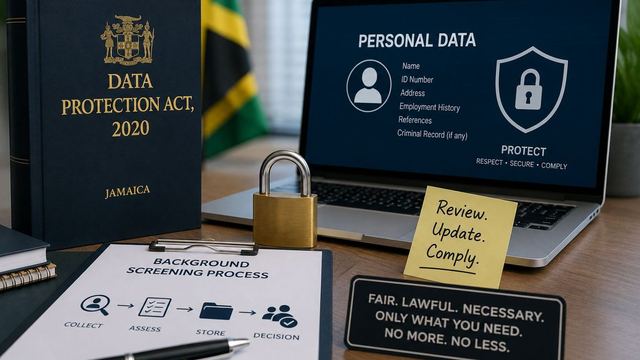
Screening programmes built before 2020 need a second look.
A short enquiry is enough to start. We’ll guide the next steps.