Construction sites are among the hardest places to secure. They are open by design, staffed by changing crews, and full of valuable, portable materials and equipment. The risks also shift as the project moves forward: what needs protecting during groundworks is very different from what needs protecting during fit-out.
A security plan written once at the start of a project and never revisited will be out of date within months.
Phase 1: Site establishment and groundworks
The main risks are theft of plant, fuel and tools, and unauthorised access to an open site. Priorities are a secure perimeter from day one, lit and locked compounds for plant and fuel, immobilisers on machinery, and a single controlled entrance.
Phase 2: Structure
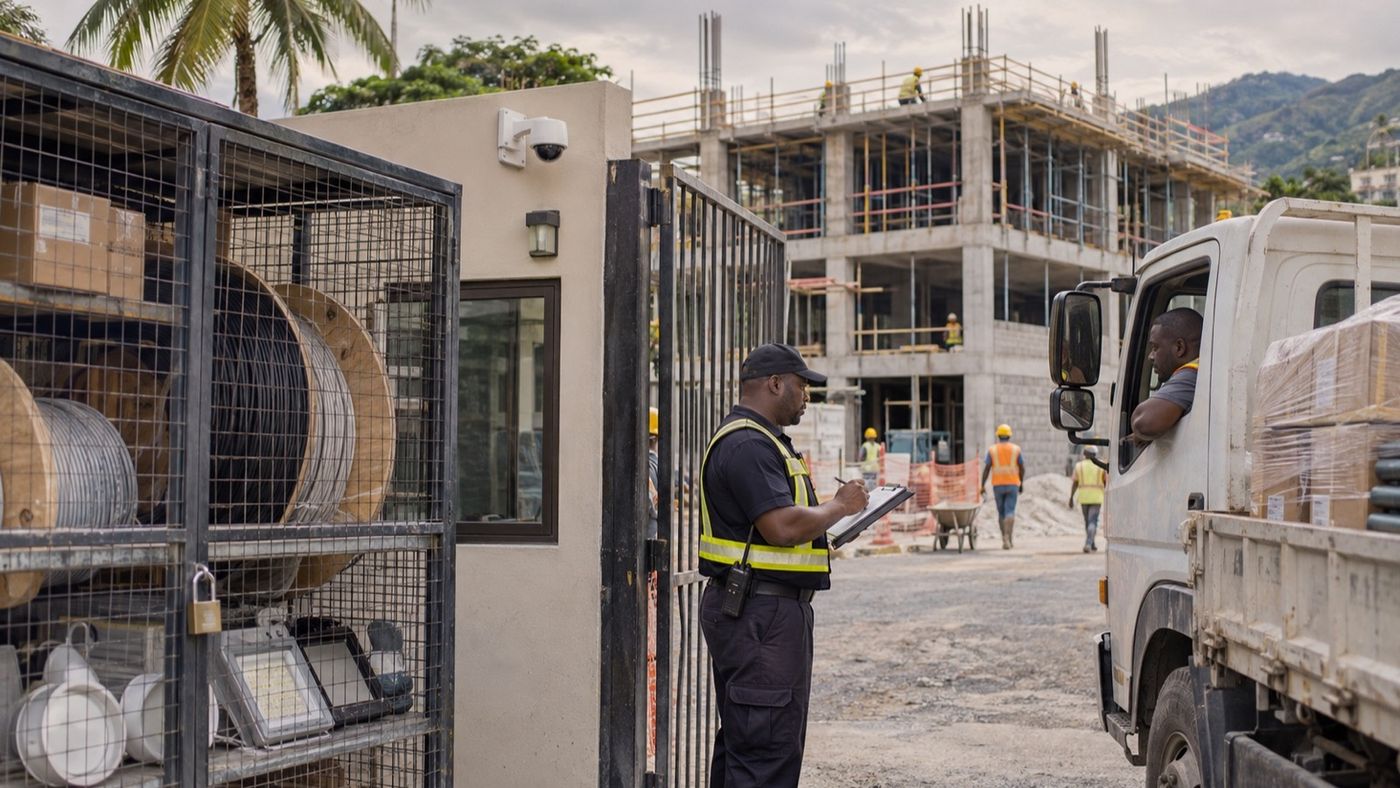
As the building rises, materials arrive in larger volumes: steel, cement, lumber, blocks. Deliveries should be scheduled, checked against paperwork and stored securely as soon as they arrive. The workforce grows, so a sign-in system and identification for everyone on site become essential.
Phase 3: Fit-out
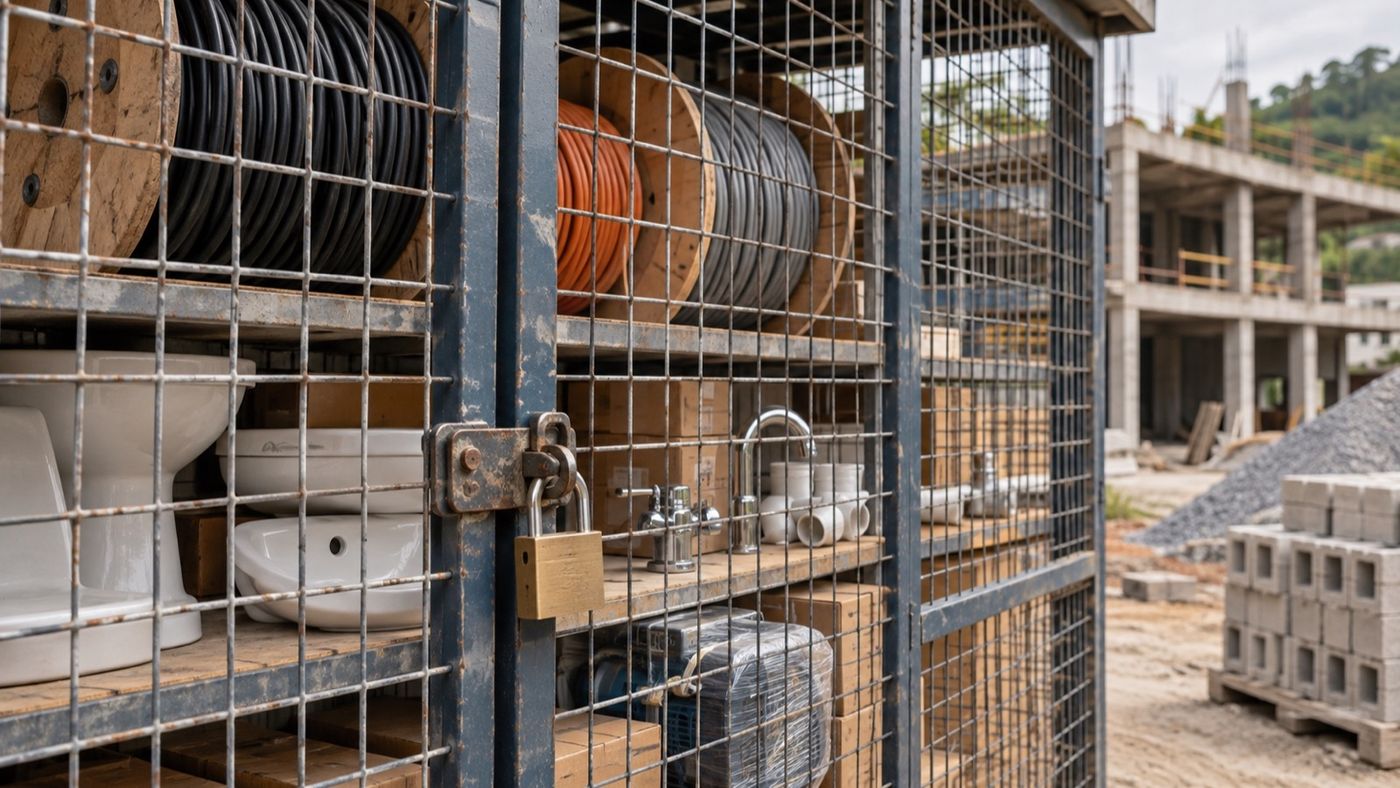
This is often the highest-risk phase. High-value, easily resold items — cable, plumbing fixtures, air-conditioning units, solar equipment, appliances — are delivered and installed. Subcontractors multiply. Theft often comes from inside the site as well as outside it. Lockable storage, tighter access control and night cover matter most here.
Phase 4: Handover
The building's own security systems are being commissioned, but are not yet in use. Responsibility can fall between the contractor and the owner. Agree in advance when security passes from one to the other, and make sure keys, codes and access cards are controlled and recorded at handover.
Throughout the project
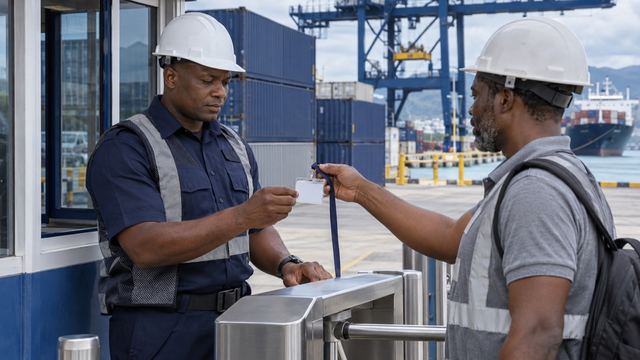
- One entrance, controlled. Everyone and everything enters through a point that is logged.
- Identification for all workers. Including subcontractors and day labour.
- Lighting. Especially compounds, storage and perimeter.
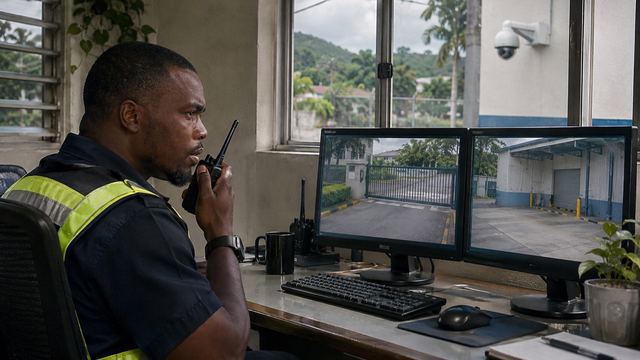
- Night and weekend cover. Guards, patrols or monitored alarms, depending on risk.
- Contractor obligations. Set security requirements in subcontracts.
What this means in practice
- Write a security plan for each phase, not one for the project.
- Review it at every major milestone.
- Schedule high-value deliveries close to installation.
- Agree the security handover date and process with the owner early.
Talk to us about construction site security planning. → Security plans & manuals