

Post orders tell a security officer what to do at a specific post: what to check, who to admit, what to record and who to call. When they are clear and current, they make security consistent across shifts and staff changes. When they are vague, outdated or missing, each officer does things their own way — and nobody can say what the standard is.
Common problems
Too long. A thirty-page binder in the guard house is rarely opened. Officers learn the job from the person before them, including their shortcuts.
Too general. "Maintain the security of the premises" is an aim, not an instruction. Officers need to know exactly what checks to carry out, how often, and what to do when something is wrong.
Out of date. Names, phone numbers, access lists and procedures change. Post orders that still list a manager who left two years ago lose credibility.
Kept in the wrong place. If the document is in an office the officer cannot enter at night, it is not available when it is needed.
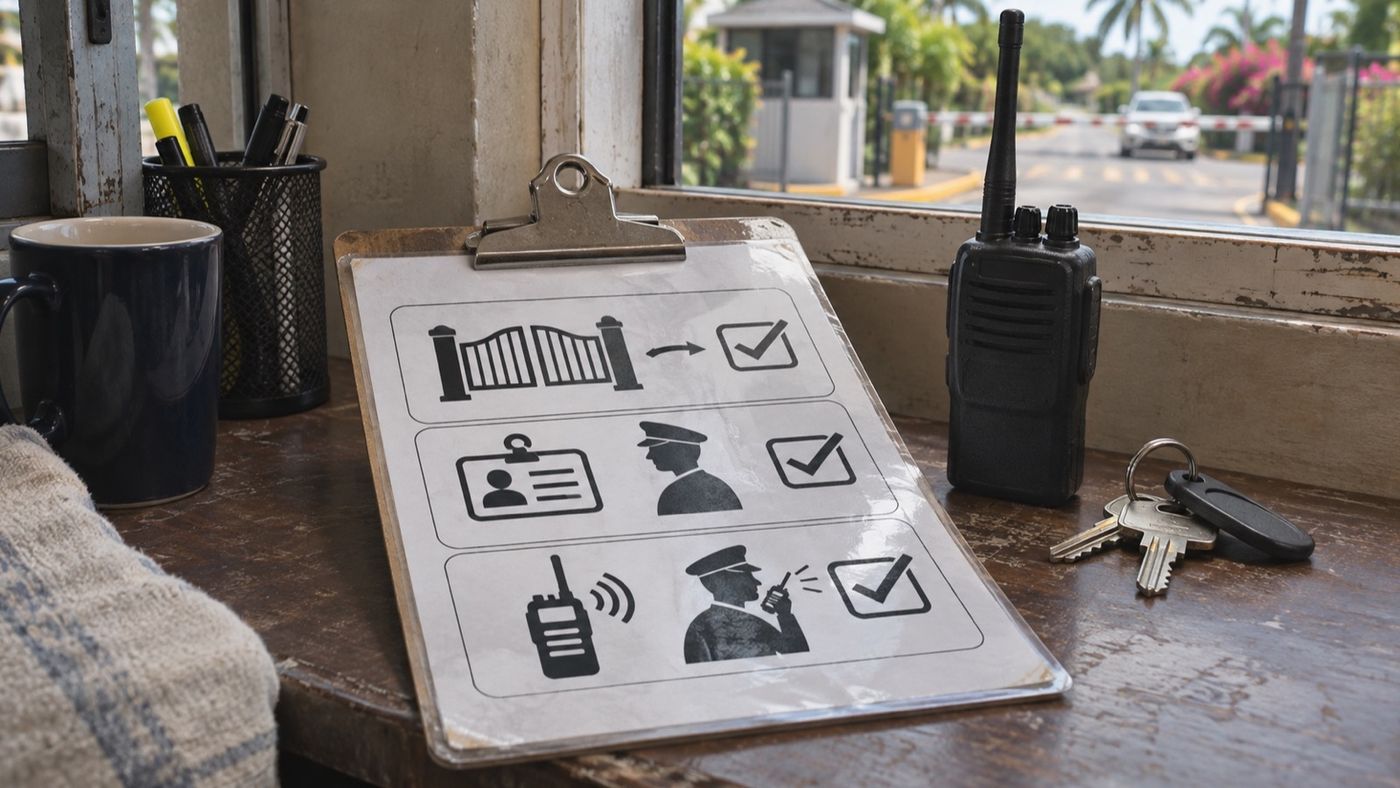
What good post orders contain
- The purpose of the post in one or two sentences
- Hours, handover and break arrangements
- Specific duties, in order, with frequency ("check rear gate lock at 22:00 and 02:00")
- Access rules: who is allowed in, what ID is required, how visitors are logged
- What to do in common incidents: alarm, intruder, injury, fire, power failure
- Who to contact, in order, with current numbers
- What to record, and where
Keep them short and specific
One post, one document, ideally no more than a few pages. Write in plain language, using the terms officers use on site. Test each post order by asking an officer to walk through it.
What this means in practice
- Write separate post orders for each post, not one for the site.
- Review contact lists and access lists monthly.
- Review the full document at least annually, and after any incident.
- Have officers sign that they have read and understood each update.
Talk to us about post orders and site procedures. → Security plans & manuals