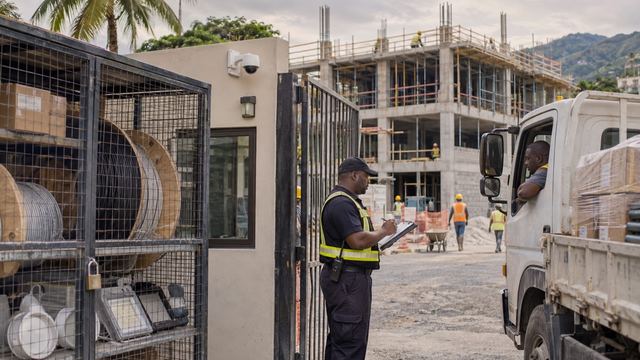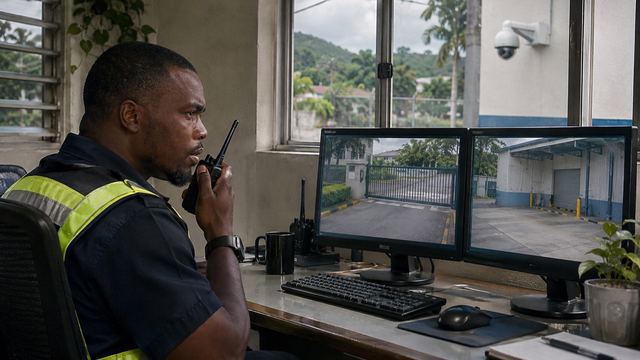
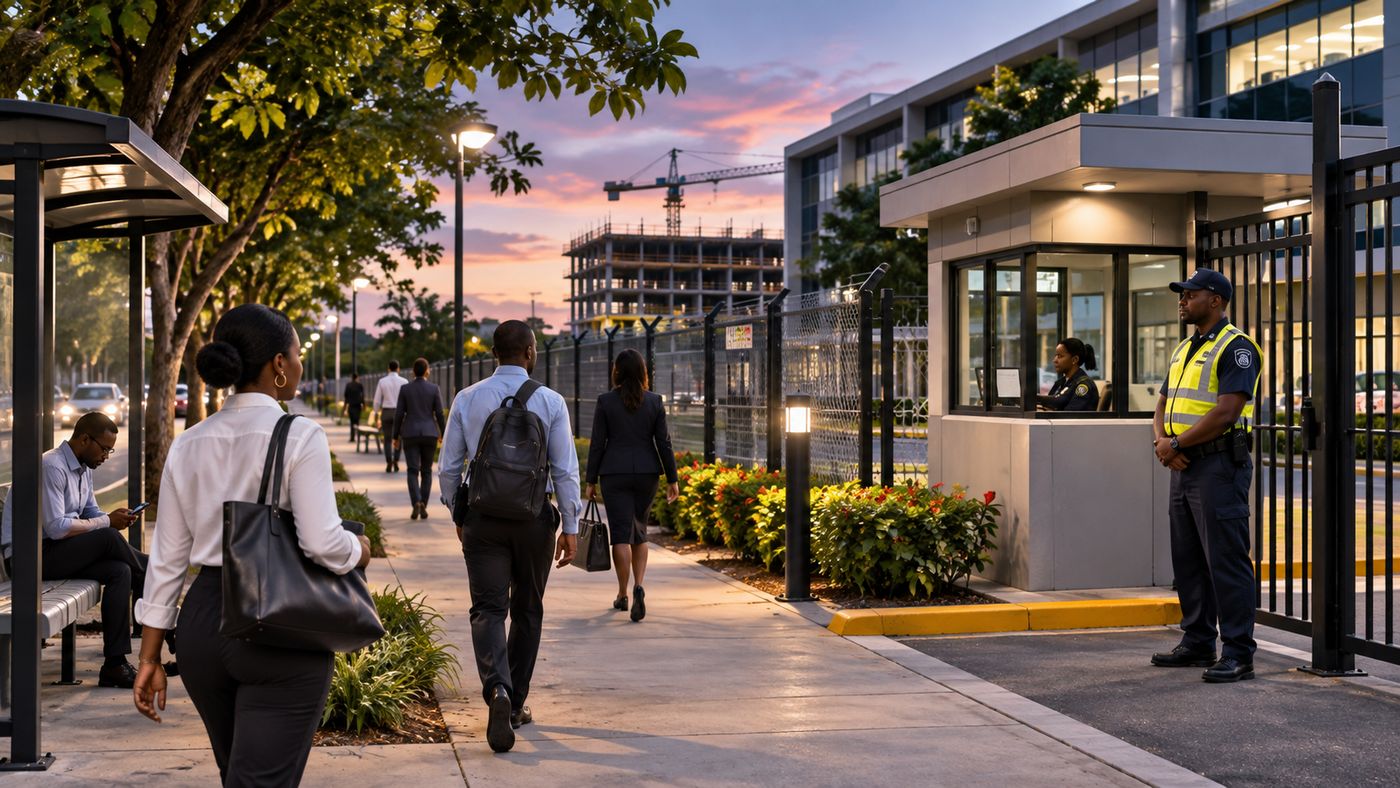
Speaking at a groundbreaking in Montego Bay on 14 November, Prime Minister Andrew Holness said: “We cannot continue to believe that we can only provide security within gated areas.” He argued that public spaces must be made safe so people can move freely beyond resort and residential enclaves, and outlined plans for tourism corridors along the Hip Strip and the Elegant Corridor.
The remarks were about national policy. But they describe a habit many organisations share: putting most of the security effort into the fence, the gate and the guard house, and much less into everything around them.
Where the perimeter stops protecting you
A strong perimeter matters. But many incidents happen where the perimeter does not reach:
- The approach. Staff walking from bus stops or car parks, especially at night or at shift change.
- Deliveries and collections. Cash, stock and equipment in transit between sites.
- Customers and visitors. People arriving at, queuing outside or leaving your premises.
- Neighbouring spaces. Poorly lit lanes, vacant lots and shared parking that are no one’s responsibility.
- Inside the gate. Insiders, contractors and visitors who are already past the guard.

Thinking beyond the fence
Security that works outside the perimeter is mostly about planning and cooperation, not hardware.
- Map the journey. Walk the routes staff and customers use to reach you, at the times they use them. Note lighting, blind spots and waiting areas.
- Adjust routines. Stagger shift changes, vary cash collection times and routes, and arrange safe drop-off points.
- Work with neighbours. Shared lighting, shared CCTV coverage of common areas and a contact list of nearby businesses spread the cost and the benefit.
- Engage the community. Good relationships with nearby residents, vendors and the local police division are a form of security no fence can provide.
- Don’t neglect the inside. Access control, screening and procedures still matter once people are through the gate.
What this means in practice
- Walk the routes to and from your site at opening and closing times.
- List the risks that sit outside your perimeter, and who owns each one.
- Talk to neighbouring businesses about shared lighting and coverage.
- Review cash and stock movements between sites.
- Introduce yourself to the community safety officer at your local police station.
Talk to us about a site and surroundings assessment. → Security assessments & surveys
Sources: Jamaica Gleaner, 16 November 2026.